OET Medicine Speaking Practice for Doctors
Practice realistic doctor-patient conversations with AI role plays built to help you succeed on the Occupational English Test (OET) Medicine Speaking sub-test.
If you are an international medical graduate preparing for OET Medicine, you do not just need more English practice. You need to practice speaking like a doctor in a real clinical conversation: with empathy, clarity, structure, and confidence.
LarryAI Tutor gives you AI role plays with AI patients designed for exactly that — and built around the Patient Centered Observation Form (PCOF), a University of Washington-developed communication framework for patient-centered care. This curriculum teaches medical learners how to do up-front agenda-setting to elicit patient concerns, establish rapport with patients, execute polite interruptions to use time efficiently, co-create a plan with patients that respects their preferences, and provide clear explanations and closure.
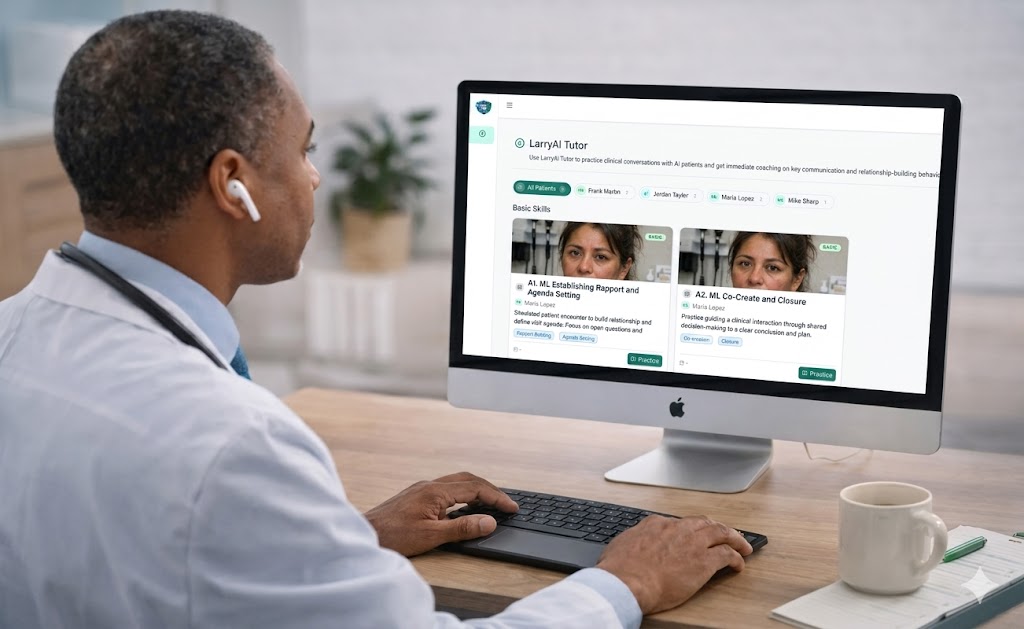
LarryAI Tutor is for you if you are:

Practice for the reality of U.S. clinical care
If you trained outside the U.S., it is important to understand that many clinical encounters here are both time-constrained and communication-intensive.
.avif)
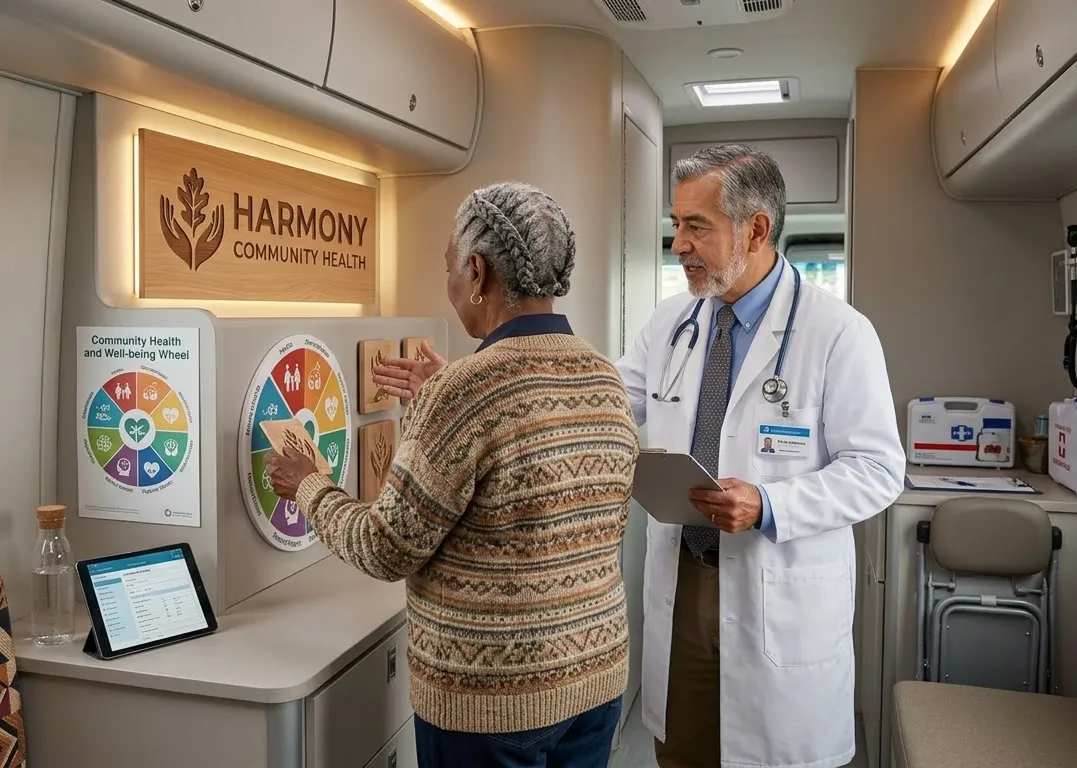
In U.S. primary care, physicians are often expected to evaluate undifferentiated concerns, identify the patient’s highest-priority issues, build rapport quickly, and guide the visit efficiently — often within a brief appointment. Strong performance depends not only on medical knowledge but also on the ability to structure the conversation, elicit the patient’s perspective, and communicate recommendations clearly.
Physicians must also communicate effectively with patients who have a wide range of health literacy, cultural backgrounds, expectations, and communication styles. In practice, this means using clear language, minimizing jargon, checking for understanding, and adapting explanations to the individual patient.
Success in U.S. clinical practice, especially in primary care, depends on more than speaking English fluently. It requires clear, patient-centered, efficient, and responsive communication to meet the needs of diverse patients.
Built for the exam you are actually taking
The Occupational English Test (OET) Medicine is not just a vocabulary test. The Educational Commission for Foreign Medical Graduates (ECFMG) says OET Medicine is designed specifically for physicians and assesses healthcare-specific English and communication skills used with patients and peers in clinical settings. Further, ECFMG says that “all Pathways applicants, regardless of native language, language of instruction at medical school, or citizenship, must satisfy this requirement.” No exceptions are made.
The OET Speaking sub-test includes two profession-specific role plays, and OET assesses not only language but also clinical communication. OET’s guidance highlights role plays, clinical communication criteria, and skills such as relationship-building and appropriate, patient-friendly language.

Why LarryAI Tutor is different
Most OET prep tools focus on sample phrases.
LarryAI Tutor helps you practice the conversation itself.
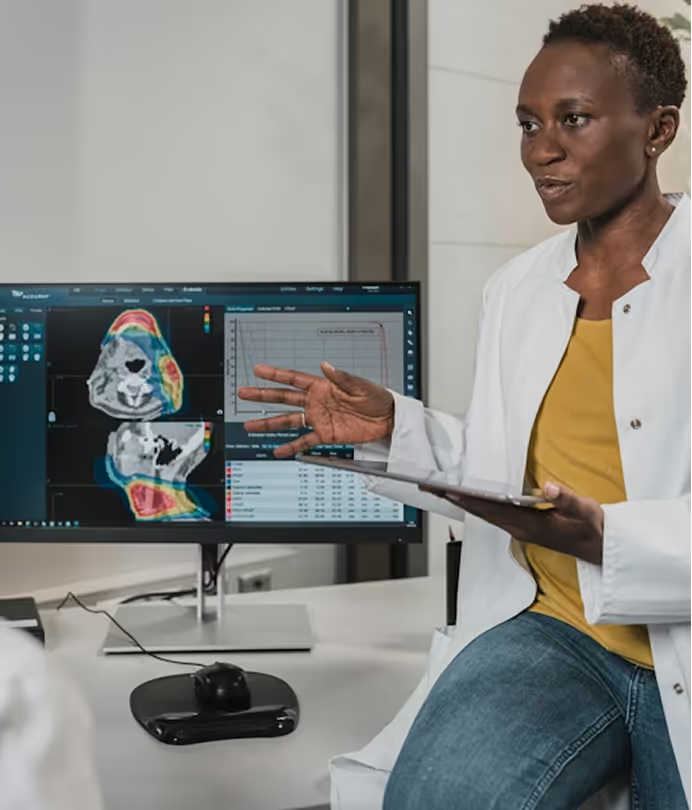
You can rehearse the communication moves that matter most:
Establishing rapport
Setting the agenda
Listening for concerns and emotions
Asking clear, focused questions
Explaining next steps simply
Co-creating a plan
Closing with clarity

Built on the Patient Centered Observation Framework (PCOF)
LarryAI Tutor’s role plays are built around the Patient Centered Observation Form (PCOF).PCOF emphasizes skills linked to increased patientsatisfaction and more efficient visits — from listeningand empathy to shared decision-making and chronicdisease management.
The PCOF is a communication and relationship assessment tool developed at the University of Washington that helps health care team members communicate effectively with patients. PCOF emphasizes skills linked to increased patient satisfaction and more efficient visits, such as listening and empathy, shared decision-making, optimizing time use through polite interruptions, and supporting patients with behavioral change in chronic disease management.
LarryAI Tutor scales PCOF by delivering a software platform that helps medical learners practice concrete communication micro-skills, such as:
Inviting the patient's concerns early
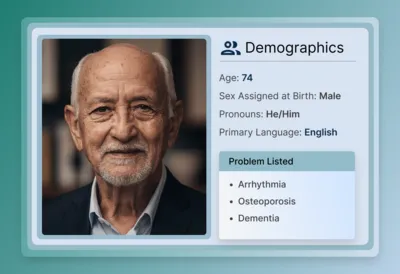
Setting an agenda early during a visit
Negotiating priorities with a patient
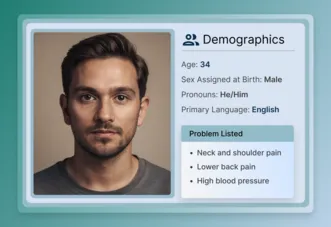
Exploring beliefs, fears, and context
Explaining a treatment clearly
Helping the patient understand next steps
What you can practice

Rapport and opening the visit

Agenda setting

Listening and empathy


Clear explanations

Shared planning and closure
Ready to explore every practice scenario?
Each module is built around real clinical situations you will face on the OET and in actual patient care.

Why AI role plays help
AI role plays let you practice more often, even when you do not have a tutor or study partner available. You can:
Repeat difficult scenarios
Practice speaking out loud
Repeat difficult scenarios
Improve on your own schedule
Because the OET Speaking sub-test is based on live role-play performance, repeated realistic practice can be especially valuable.
Passing OET Medicine may be your immediate goal.
But the same communication skills also support success in residency, clerkships, and real clinical care:
Practice OET Medicine Speaking with confidence
If you are looking for OET Medicine speaking practice for doctors, LarryAI Tutor offers a realistic tool to help you prepare.
Practice AI role plays. Get feedback. Build confidence. Strengthen the communication skills that matter on the exam and in real clinical settings.


Practice OET Medicine Speaking with confidence
If you are looking for OET Medicine speaking practice for doctors, LarryAI Tutor offers a realistic tool to help you prepare. Practice AI role plays. Getfeedback. Build confidence. Strengthen the communication skills thatmatter on the exam and in real clinical settings.
Frequently Asked Questions
Everything you need to know about practicing withLarryAI Tutor.

OET Medicine is the medicine-specific version of the Occupational English Test for healthcare professionals. ECFMG says Pathways applicants must achieve a satisfactory OET Medicine score to meet the communication skills requirement for ECFMG Certification.
The OET Speaking sub-test includes two profession-specific role plays in which you act as the doctor, and the interlocutor as the patient. OET assesses both linguistic performance and clinical communication.
The OET Speaking sub-test is based on live clinical role plays. Practicing realistic patient conversations helps you improve clarity, empathy, structure, and confidence in the exact type of interaction the exam is designed to simulate.
Reading helps you recognize good communication. Practice helps you actually do it. LarryAI Tutor lets you rehearse the conversation itself so you can work on how you sound, how you guide the visit, and how you respond in the moment.
PCOF, or the Patient Centered Observation Form, is a communication and relationship assessment tool developed at the University of Washington to help health care team members communicate effectively with patients. LarryAI Tutor has embedded PCOF into its role plays and how its AI coach delivers feedback.
PCOF matters because it is not a generic communication checklist. It is a clinically grounded framework that has been used to train more than 10,000 physicians and has become the leading communication curriculum used across U.S. medical schools and residency programs.
For learners preparing for OET Medicine Speaking, that matters because the exam rewards more than fluent English: it rewards the ability to conduct a patient encounter that is organized, empathetic, clear, and patient-centered. LarryAI Tutor uses PCOF to make those behaviors concrete, measurable, and coachable through repeated role-play practice.